
-
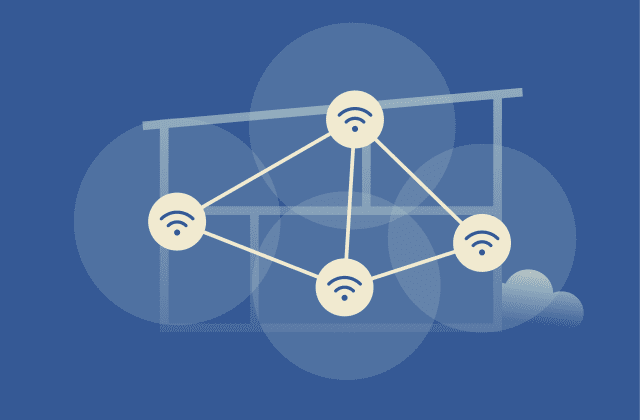
What is a mesh network and how does it work?
A mesh network is a system of multiple hardware devices (called nodes) that work together to create a single, seamless Wi-Fi network. They can be useful in homes that experience dead zones and are wid...
-

What is network jitter, and how does it impact internet performance?
Network jitter, or packet delay variation, happens when data packets experience inconsistent delivery times due to congestion or routing changes. This inconsistency directly affects real-time applicat...
-

How to change IP address on Android (step-by-step guide)
Knowing how to change your Android phone’s Internet Protocol (IP) address can be useful in several situations. If you’re having trouble connecting to certain websites or services, suspect an IP co...
-

Internet infrastructure: What it is and how it works
The internet feels so simple: you tap a screen, click a mouse, and enjoy a whole world of information and connections, right there at your fingertips. Behind the scenes, however, the internet is anyth...
-

What is SoftEther VPN, and why should you care?
SoftEther (or Software Ethernet) VPN is a free, open-source VPN software suite created at the University of Tsukuba in Japan that's been praised for its flexibility and security. While the service pro...
-
IKEv2 vs. OpenVPN: Which VPN protocol should you choose?
The protocol you choose impacts your experience of using a VPN, and Internet Key Exchange version 2 (IKEv2) and OpenVPN are both popular options. Each comes with distinct strengths and trade-offs. IKE...
-

What is OpenVPN, and how does it work?
OpenVPN is one of the most widely used and trusted VPN protocols in the industry. It has a strong reputation built on its robust encryption and proven security design, as well as its open-source code....
-
WireGuard vs. IPsec: Which VPN protocol is better?
When it comes to VPN security, stability, and speed, the protocol you choose can make or break your online experience. As such, it's important to know the differences between the top options, so you k...
-

Split tunneling vs. full tunneling: Which should you use?
A virtual private network (VPN) can be configured to handle your traffic in two modes: full tunneling and split tunneling. With full tunneling, all your traffic goes through the VPN, whereas with spli...
-

Multi-hop VPN: Is it smarter than switching servers?
Using a virtual private network (VPN) is a great way to protect your privacy online, but sometimes people wonder whether routing traffic through more than one server adds meaningful benefits. A multi-...
VPN guides